
The New T20 Style: How India Changed Modern Cricket and Forced England to Catch Up
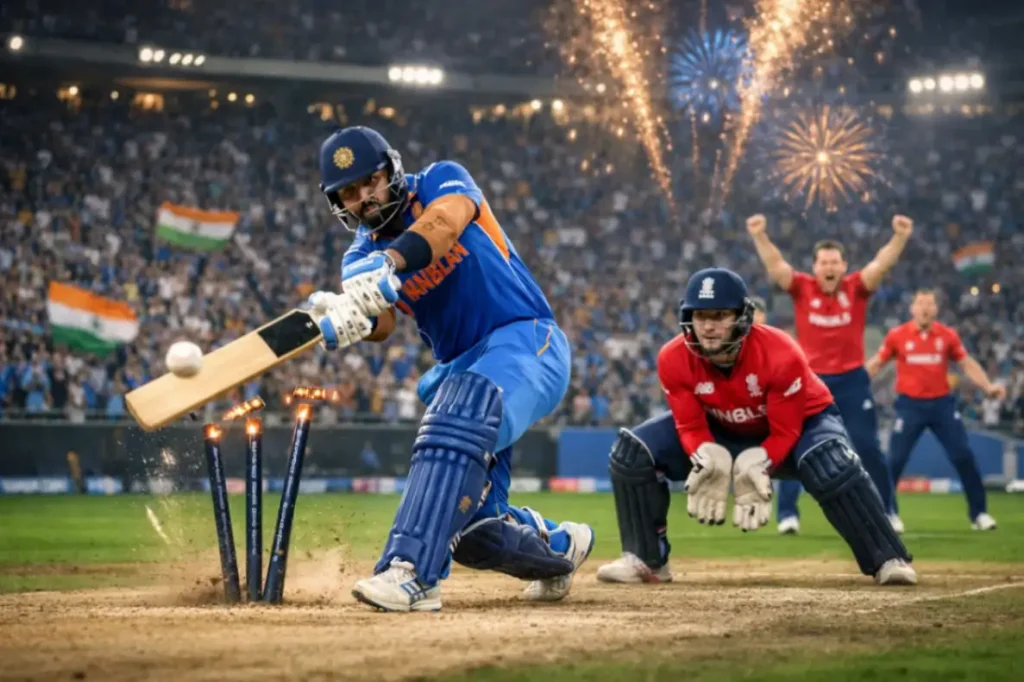
The T20 format has transformed cricket more dramatically than any other innovation in the sport’s history. What began as a short-format experiment designed to attract younger audiences has evolved into a sophisticated tactical battleground where aggressive batting, rapid scoring rates, and fearless decision-making define success. Over the past decade, India has emerged as one of the central forces shaping how modern T20 cricket is played.
India’s influence goes far beyond simply producing talented players. Through the Indian Premier League (IPL), a massive domestic talent pool, and a culture increasingly oriented toward attacking cricket, the country has helped redefine the expectations of T20 batting and strategy. The ripple effects have been global. Teams that once dominated through conservative accumulation have been forced to adapt or risk falling behind.
England is perhaps the clearest example of this shift. Once known for a more traditional approach to limited-overs cricket, England has spent the past decade rebuilding its white-ball philosophy. In many ways, England’s modern T20 style represents a response to innovations that India helped popularize. Understanding how India reshaped the format reveals why modern T20 cricket looks the way it does today.
The Evolution of Aggressive T20 Batting
Early T20 cricket often looked like a condensed version of one-day cricket. Batters were cautious during the first overs, teams aimed for totals around 140–160, and risk-taking was relatively limited. The goal was survival first, acceleration later.
India played a significant role in changing that mindset. Instead of treating the format as a shortened ODI, Indian teams began emphasizing relentless scoring from the very first ball. The logic was simple: with only 120 deliveries available, every dot ball carried a measurable cost.
Players such as Virat Kohli, Rohit Sharma, Hardik Pandya, and later Suryakumar Yadav demonstrated that T20 batting could combine consistency with explosive innovation. Rather than saving aggression for the death overs, Indian batters started pushing run rates throughout the innings.
This shift also changed how teams thought about acceptable risk. A batter scoring at a strike rate of 140–160 became more valuable than someone accumulating slowly at 110. Dot balls began to be viewed almost as strategic failures.
The IPL played a crucial role in accelerating this evolution. The tournament created an environment where international stars, domestic players, and coaches from different countries exchanged ideas and tactics. Indian players gained exposure to aggressive methods used in leagues around the world, while also refining their own attacking instincts.
As a result, modern T20 cricket now expects batters to maintain high strike rates from the powerplay through the middle overs. The traditional model of slow starts followed by late acceleration has largely disappeared.
IPL as the Tactical Laboratory of T20 Cricket
The Indian Premier League has become the most influential competition in global T20 cricket. Beyond entertainment value and financial power, the IPL functions as a tactical laboratory where strategies are tested, refined, and exported to international teams.
| Tactical Innovation | Impact on Modern T20 | Example in IPL |
|---|---|---|
| Aggressive powerplay batting | Teams target 50+ runs in first six overs | Mumbai Indians attacking starts |
| Flexible batting order | Promoting hitters earlier in innings | Rajasthan Royals pinch hitters |
| Death-over specialists | Bowlers trained for final overs | Jasprit Bumrah role |
| Data-driven matchups | Teams analyze batter vs bowler data | Chennai Super Kings analytics |
These tactical ideas quickly spread beyond the IPL. International teams study IPL performances closely because the tournament gathers many of the world’s best players in one environment.
For India, the IPL has created a constant pipeline of T20-ready cricketers. Young players enter the national system already accustomed to high scoring rates, pressure situations, and advanced analytics. This environment helps India maintain a deep pool of talent capable of performing in aggressive systems.
The IPL’s influence has also pushed other cricket boards to rethink how domestic leagues function. T20 competitions in England, Australia, Pakistan, and the Caribbean have adopted similar tactical philosophies, though few have matched the IPL’s scale or developmental impact.
Key Characteristics of India’s Modern T20 Strategy
India’s approach to T20 cricket today reflects a broader strategic philosophy built around flexibility, fearless batting, and depth throughout the lineup. Rather than relying on one or two star players, teams emphasize collective aggression and adaptable roles.
Several key characteristics define this modern Indian T20 style.
- High-tempo batting from the opening overs, prioritizing strike rate over cautious accumulation.
- Deep batting lineups where hitters appear as low as number seven or eight.
- Flexible batting orders that adapt to match situations and bowling matchups.
- Multi-skilled players who contribute with both bat and ball.
- Strategic use of data analytics to plan bowling matchups.
These principles have allowed Indian teams to maintain scoring pressure throughout the innings. Even if early wickets fall, the presence of aggressive middle-order hitters prevents the run rate from collapsing.
Another hallmark of India’s T20 evolution is the rise of unconventional stroke play. Players like Suryakumar Yadav have expanded the range of scoring areas, using ramps, scoops, and 360-degree hitting to challenge traditional field placements.
This style forces bowlers to constantly adjust their plans, making defensive tactics increasingly difficult. As more Indian players adopt these techniques, the overall scoring potential of teams continues to increase.
England’s Response to the Indian T20 Revolution
England’s white-ball transformation over the past decade has been widely praised, but it also reflects the pressure created by changing global standards. Observing the rise of aggressive batting in leagues like the IPL, England recognized that its traditional approach needed modernization.
The England and Wales Cricket Board began restructuring the national team’s philosophy after disappointing performances in earlier tournaments. Coaches and analysts studied successful T20 systems, including those emerging from India’s domestic league structure.
The result was a shift toward fearless batting, depth in the lineup, and a willingness to attack from the start of the innings. Players such as Jos Buttler, Jonny Bairstow, and Liam Livingstone exemplify this aggressive approach.
England also invested heavily in domestic competitions. The Hundred and the Vitality Blast now serve as platforms for experimenting with modern T20 tactics. Young players entering the England setup are trained to prioritize high strike rates and adaptability.
This transformation allowed England to become one of the most formidable white-ball teams in the world. Yet the influence of Indian cricket remains visible in many aspects of England’s strategy, from aggressive powerplay batting to the emphasis on versatile all-rounders.
The Role of Analytics and Data in T20 Strategy
Modern T20 cricket is increasingly shaped by data analysis. Teams now use advanced metrics to evaluate player performance, optimize batting orders, and design bowling strategies. India has embraced this analytical approach through both national team planning and IPL franchise systems.
Data helps teams identify favorable matchups between specific bowlers and batters. Analysts examine historical performance patterns to determine which players struggle against certain types of deliveries or bowling angles.
This analytical mindset has changed how captains manage resources during matches. Instead of relying purely on instinct, decisions about bowling changes or field placements are often guided by statistical models.
India’s vast cricket ecosystem produces enormous amounts of performance data, especially through the IPL. Franchises track everything from strike rates in different phases of the innings to boundary percentages against particular bowlers.
Such information allows teams to refine strategies in ways that were impossible only a decade ago. As analytics becomes more sophisticated, the tactical complexity of T20 cricket continues to increase.
The Global Impact of India’s T20 Influence
India’s role in shaping modern T20 cricket extends far beyond its own national team. The country’s domestic structure, player development systems, and financial power have made it the central hub of the sport’s short-format evolution.
Many international players now treat the IPL as the ultimate stage for developing T20 skills. The league exposes them to high-pressure situations and diverse tactical approaches. In turn, these players bring lessons learned in India back to their national teams.
The influence is also cultural. The expectation that T20 cricket should be fast, entertaining, and aggressive has become universal. Fans now expect higher scoring rates, more innovative batting shots, and constant momentum shifts.
As other nations attempt to replicate India’s developmental model, global competition in T20 cricket continues to intensify. Teams are investing more resources into analytics, coaching, and domestic leagues designed to produce fearless players.
India may not dominate every international tournament, but its influence on how the format is played is undeniable. The country has helped define the strategic blueprint that modern teams now follow.
Conclusion
The transformation of T20 cricket over the past decade reflects a combination of tactical innovation, player development, and structural changes within the sport. India has been at the center of this evolution, using the IPL and a vast talent pool to experiment with aggressive strategies and new playing styles.
As these ideas spread globally, teams like England were forced to adapt in order to remain competitive. The result has been a faster, more dynamic version of cricket that prioritizes attacking play and tactical flexibility.
Modern T20 cricket is no longer simply about surviving long enough to accelerate late in the innings. Instead, success depends on maintaining pressure from the first ball to the last. In shaping this new reality, India has played one of the most influential roles in the history of the format.