
Infrastructure Threat: New Road Stadium Flooded After Storm
When extreme weather hits, sport is often one of the first public systems to show how vulnerable local infrastructure can be. That is exactly what has happened at New Road, one of England’s most recognisable cricket venues, after severe flooding followed a powerful storm. Images of waterlogged outfields, damaged access areas, and disrupted facilities have sparked immediate concern across the cricket community.
This is not just an inconvenient delay to a few fixtures. A stadium flood is an operational crisis that affects scheduling, finances, player preparation, broadcasters, staff, and the wider region that depends on matchday activity. For county cricket and regional competitions, where budgets and calendar space are already tight, even a short disruption can ripple across an entire season.
New Road’s situation is a reminder that climate-driven weather extremes are no longer rare “once in a generation” events. They are recurring challenges that demand modern planning, better drainage design, and emergency response systems that protect both the sport and the communities around it. The real story is not only the flood itself, but what it reveals about the future of cricket infrastructure in England.
What Happened at New Road and Why the Damage Matters
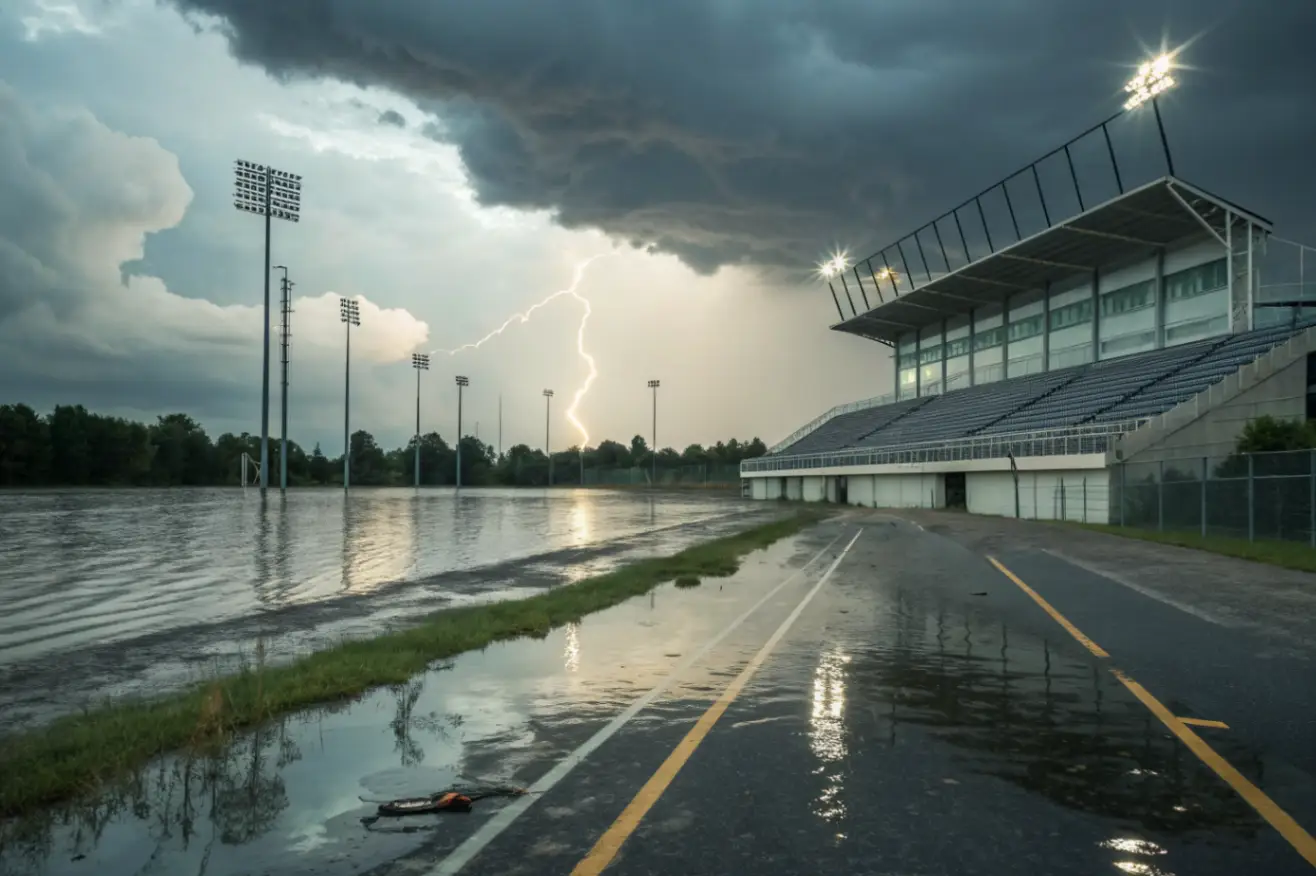
New Road is not an ordinary ground. It is a venue with history, identity, and strong regional importance. A major flood there instantly becomes more than a local maintenance problem because it threatens the stability of match operations at a high level of domestic cricket. When floodwater enters a stadium complex, the damage is rarely limited to what fans see from the stands.
The most visible issue is the outfield, which can become saturated beyond recovery for weeks if the soil structure collapses. Cricket outfields are not designed to behave like wetlands. Once standing water sits for too long, it can suffocate grass roots, compact soil layers, and create uneven surfaces that are unsafe for fielders. Even after the water drains, the ground can remain soft and unstable, increasing the risk of injuries and making high-quality play impossible.
The pitch square is even more sensitive. Although grounds teams often protect the square with covers, flood conditions can overwhelm those measures. Water intrusion into the square can disrupt the clay balance, damage prepared strips, and force a full reset of the pitch preparation schedule. That matters because cricket pitches are not repaired overnight. They are managed over weeks with controlled rolling, watering, mowing, and careful timing.
Beyond the playing surface, a stadium flood can damage electrical systems, indoor spaces, and access routes. Changing rooms, medical facilities, hospitality areas, and media infrastructure can all suffer from water ingress. Even if the grass looks “dry enough” from a distance, the venue might still be unusable because safety checks fail or because key operational rooms cannot function.
This is where the disruption becomes seasonal rather than temporary. County cricket calendars are packed with fixtures, travel plans, and broadcast arrangements. A washed-out week is not easily rescheduled, and a stadium closure forces organisers into difficult decisions: move games to alternative venues, postpone them, or cancel them entirely. Each option has consequences, from lost ticket revenue to reduced competitive integrity.
There is also the human side. Groundskeepers face enormous pressure to restore the surface quickly, but rushing repairs can create long-term problems. Players lose preparation time and training rhythm. Fans lose matchdays they planned around. Local businesses lose foot traffic. In regional cricket ecosystems, the stadium is a hub of economic and community life, so flood damage is felt far beyond the boundary rope.
Immediate Impact on the Cricket Schedule and Match Operations
The first question after a major stadium flood is simple: what happens to the fixtures? But the answer is rarely simple, because cricket scheduling is one of the most complex systems in domestic sport. You have multiple formats, limited calendar space, weather-sensitive preparation, and the need to coordinate teams, officials, broadcasters, and venue staff.
In the short term, the most likely outcomes are postponements and relocations. Postponements are painful because they create backlog. Relocations are difficult because alternative venues must meet professional standards, have availability, and provide enough facilities for players and officials. Even if another ground can host, the matchday experience may be reduced for supporters, and the home team loses the advantage of familiar conditions.
To make the situation clearer, here is a practical overview of the most common disruption scenarios that follow a flooded cricket ground, and how they typically affect a season.
Before looking at the table, it helps to remember that the issue is not just “water on grass.” A flooded stadium triggers checks across safety, playing standards, and logistics, and those checks determine how quickly cricket can return.
| Disruption Scenario | What It Means in Practice | Risk Level for the Season |
|---|---|---|
| Outfield waterlogging | Soft ground, uneven bounce near boundary, unsafe footing | High |
| Pitch square affected | Prepared strips unusable, pitch quality drops | Very High |
| Facility damage | Changing rooms, power, media areas need repairs | Medium to High |
| Access issues | Parking, entrances, emergency routes disrupted | Medium |
| Relocated fixtures | Games moved to other venues, reduced home revenue | Medium |
| Fixture backlog | Postponed matches squeeze calendar later | High |
After considering these outcomes, the bigger concern becomes cumulative disruption. One postponed match can often be managed. Several disruptions across the season, however, create competitive imbalance. Some teams end up playing too many matches in a short time, increasing injury risk and reducing performance quality. Others lose home games and the revenue that comes with them.
From an operational perspective, matchday staffing becomes uncertain. Catering, security, ticketing, stewards, and broadcast crews all rely on stable schedules. When fixtures move, the stadium loses not only income but also workforce continuity. Staff who are part-time or event-based may not be available on new dates, creating further strain.
There is also the question of training and preparation. Teams often plan practice sessions around their home ground, especially in early-season conditions when indoor training has limits. If New Road remains unavailable, players may have to train elsewhere, reducing efficiency and increasing travel fatigue.
In modern domestic cricket, even small disruptions can influence results. A pitch prepared under pressure may not behave as intended. An outfield that is playable but not fully restored can slow the ball, affecting scoring patterns and fielding tactics. These details matter in both red-ball and white-ball cricket, where fine margins decide matches.
The immediate impact, then, is not only about “will the next game happen?” It is about whether the venue can provide safe, fair, and professional conditions that uphold the standards expected in England’s regional and county cricket system.
How Flooding Threatens Pitch Quality, Safety, and Player Performance
Cricket is uniquely vulnerable to environmental disruption because the sport depends on surface consistency more than most games. A football pitch can sometimes tolerate heavy rain and still host a match, even if the quality drops. Cricket cannot. If the pitch or outfield becomes unsafe or unpredictable, the entire contest loses integrity.
Floodwater changes the ground in ways that are difficult to reverse quickly. The outfield may look fine after a few sunny days, but beneath the surface the soil structure may be compromised. When soil becomes saturated and then dries unevenly, it can form soft patches, sink areas, or small ridges. Fielders sprinting and sliding are at risk of ankle and knee injuries, and even minor surface inconsistencies can lead to awkward falls.
For the pitch square, the risk is even more serious. Cricket pitches rely on controlled moisture content. Too wet, and the surface becomes slow, soft, and prone to excessive seam movement early on. Too dry after rapid drying, and cracks can form, leading to inconsistent bounce. In the worst cases, pitch preparation becomes a race against time rather than a carefully managed process. That can produce surfaces that are either unfairly bowler-friendly, unpredictably variable, or simply unsafe.
Another factor is the ball’s behaviour in wet conditions. Even if a match goes ahead after partial recovery, damp outfields affect the ball quickly. A wet ball reduces grip for spin bowlers, changes swing patterns for seamers, and makes fielding harder. This can distort tactics and outcomes, turning a professional match into a compromised contest.
To understand how wide the impact can be, it helps to break down the main performance and safety threats that follow a stadium flood:
- Reduced outfield speed, lowering boundary rates and changing scoring strategies.
- Increased injury risk for fielders due to unstable footing and soft ground.
- Compromised pitch preparation leading to unpredictable bounce.
- Damp ball conditions reducing the effectiveness of spin bowling.
- Higher workload for fast bowlers if matches become stop-start or overcast-heavy.
- Mental fatigue from uncertainty, relocation, and disrupted routines.
These factors don’t operate in isolation. They stack. A team playing on a slower outfield with a damp ball may struggle to score freely, which increases pressure, which changes shot selection, which increases dismissal risk. Bowlers may overcompensate for lack of grip or control, leading to more no-balls, more wides, and higher injury risk.
There is also the issue of training load management. After disruptions, teams often face condensed schedules. That means bowlers may have less recovery time between matches, increasing the likelihood of stress injuries. Batters may have fewer practice sessions on match-like surfaces. Coaches must adjust plans constantly, and sports science teams have to manage fatigue under unpredictable conditions.
The psychological impact should not be underestimated either. Cricket is a rhythm sport. Players thrive on routines: warm-up patterns, familiar dressing room environments, known sightlines, and consistent preparation. When a home venue is damaged, those routines disappear. Even experienced professionals can struggle when every week feels like a logistical improvisation.
So while flooding is often described as a “ground issue,” it quickly becomes a performance issue, a safety issue, and a competitive balance issue. If New Road cannot return to full standard quickly, the effect will be felt in results, player availability, and the overall quality of regional cricket.
Financial and Community Consequences for Regional Cricket
When a major cricket venue is flooded, the financial damage often lasts longer than the physical damage. Stadium recovery costs can be significant, but the bigger loss is usually hidden: the matches that never happen, the tickets not sold, and the commercial deals that become harder to fulfil.
Regional cricket venues depend on a mix of revenue streams. Matchday tickets matter, but so do hospitality packages, food and beverage sales, sponsorship visibility, and local partnerships. If fixtures are cancelled or relocated, those income streams weaken immediately. Some costs remain fixed, too. Staff wages, insurance, maintenance contracts, and security requirements do not disappear just because the ground is unavailable.
In addition, a damaged venue can lose momentum with fans. Supporters may travel less if they are unsure whether games will go ahead. Families planning weekend visits may choose other activities. That shift in behaviour can take time to recover even after the stadium is repaired.
The community impact is equally important. A major ground is not just a sports facility. It is a local gathering point, a source of pride, and an economic driver. Matchdays bring visitors into the area, benefiting restaurants, shops, transport services, and small businesses. When cricket stops, that ecosystem feels it.
Flooding also raises questions about long-term investment. If extreme weather becomes more frequent, venues must spend more on resilience measures: improved drainage, reinforced embankments, flood barriers, and upgraded pump systems. Those upgrades require funding, and in regional sport, funding is rarely unlimited. The danger is that smaller venues fall behind, widening the gap between top-tier infrastructure and the rest of the cricket pyramid.
For clubs and counties, the financial pressure can affect player development pathways. Budget constraints may reduce investment in academies, women’s cricket programmes, and community outreach. That is how a single flood event can indirectly shape the future of the sport.
There is also a reputational factor. Broadcasters and sponsors want reliability. If a venue becomes associated with repeated disruptions, it may be less attractive for high-profile fixtures or commercial events. Even if the stadium is not at fault, perception matters. A modern sports venue is expected to be resilient, and extreme weather tests that expectation in public view.
At the same time, moments like this can strengthen community support. Fans often rally around a club or venue during crisis. Volunteer efforts, fundraising initiatives, and public awareness campaigns can help accelerate recovery. In that sense, the flood can become a catalyst for renewal, pushing stakeholders to modernise infrastructure and strengthen planning.
But that positive outcome depends on speed, coordination, and resources. Without a clear recovery plan and investment, the consequences can linger across multiple seasons, turning a storm-related incident into a long-term challenge for regional cricket.
Recovery Plan: Drainage, Ground Repair, and Climate Resilience
Recovering a flooded cricket stadium is not simply a matter of waiting for water to disappear. A professional recovery plan must address the surface, the systems beneath it, and the operational readiness of the venue. In many cases, the smartest approach is staged recovery: restoring safe access and basic operations first, then rebuilding pitch and outfield quality to full performance level.
The first step is assessment. Grounds teams and engineers need to determine how deep the water penetrated, how long it remained, and which parts of the venue were affected. Soil testing may be required to understand compaction and drainage performance. The pitch square must be evaluated for moisture consistency and structural integrity.
Drainage is often the defining factor. If a ground floods, it is not only because rainfall was heavy. It is also because drainage capacity was exceeded, blocked, or not designed for modern storm intensity. A long-term fix may require upgraded drainage channels, improved outfall routes, and additional pumping capacity. In some venues, landscape redesign becomes necessary to redirect water away from the square and key facilities.
Ground repair involves both agronomy and engineering. The outfield may need aeration, reseeding, topdressing, and controlled drying cycles. The pitch square may require careful rolling schedules and potentially strip replacement depending on damage severity. These processes take time, and rushing them can create uneven surfaces that cause problems later in the season.
Operational recovery is equally important. Even if the grass is improving, the stadium must meet safety requirements. Electrical systems, lighting, emergency routes, and spectator areas must be checked. Changing rooms and medical spaces must be clean, dry, and fully functional. Broadcast infrastructure must be reliable. A venue cannot host professional cricket if basic systems are compromised.
The flood at New Road also highlights the need for climate resilience planning in sport. Extreme weather is becoming a structural reality, not an occasional surprise. Resilience means investing in prevention, not only repair. That can include flood barriers, smarter drainage design, better monitoring systems, and emergency procedures that protect the pitch square early.
Modern sports infrastructure planning increasingly treats weather risk the way it treats security risk: as something that must be anticipated, modelled, and mitigated. For cricket, that means building venues that can handle intense rainfall events without catastrophic disruption. It also means improving coordination between clubs, local authorities, and environmental agencies, because flooding is rarely a stadium-only issue. It is part of a wider regional system of rivers, drainage networks, and land management.
If New Road’s recovery is handled with long-term resilience in mind, it could become a model for how English cricket adapts. The challenge is ensuring that the response is not limited to short-term patching. The goal should be a venue that can host cricket reliably in a future where storms and flooding are increasingly common.
What This Means for the 2026 Season and English Cricket’s Future
The immediate concern is whether New Road can return to operational readiness in time to avoid major disruption to the season. The longer the ground remains compromised, the more complex the fixture situation becomes. Teams may face travel-heavy schedules, relocated matches, and condensed blocks of cricket later in the year. That affects performance, injury risk, and fan engagement.
But the bigger meaning goes beyond one stadium. Flooding at a major venue is a signal event. It shows how exposed cricket can be to climate pressure, and how quickly the sport’s calendar can be thrown into uncertainty. If storms and flooding become more frequent, English cricket will need a broader infrastructure strategy rather than case-by-case responses.
That strategy may include standardised resilience requirements for professional venues, stronger funding mechanisms for drainage upgrades, and more flexible scheduling models that allow for weather-driven disruption. It may also encourage investment in secondary venues that can host relocated fixtures without a drop in quality.
For fans, the situation is a reminder that local grounds are valuable assets that need protection. The best cricket experiences come from venues with character and history, but history alone does not stop floodwater. Protecting these grounds requires modern engineering and long-term planning, not only tradition.
For clubs and organisers, the flood underscores the importance of risk management. Insurance policies, contingency venues, communication plans, and rapid-response maintenance resources are no longer optional extras. They are part of running cricket in a changing environment.
The most realistic outlook is that recovery will be possible, but not instant. The key question is how much of the season is affected and whether the ground returns at full quality or at a compromised standard. Cricket can tolerate a few lost days. It cannot easily tolerate a venue operating below safe and professional conditions for months.
In the end, New Road’s flooding is both a crisis and a warning. It is a crisis because it threatens matches, revenue, and preparation. It is a warning because it shows what the future may hold for many venues across England. If the sport responds with resilience-focused investment, the long-term outcome can be stronger infrastructure and smarter planning. If it responds only with short-term fixes, the same story may repeat again, with higher costs each time.